
Worried about how infidelity affects children? Research suggests the effects often show up as lost trust, heavier family roles and harder adult relationships, but they are not fixed, and honesty helps many heal.
This page is part of the wider topic of the effects of infidelity on family, and it focuses on the children’s side of the story.
| Item | Value |
|---|---|
| People surveyed in a study reported in 2025 | 280 adults aged 18 to 30 |
| Share who said at least one parent had an affair | About half of participants |
| Typical age of discovering a parent’s affair | Around 13 years |
| Adult children who said it lessened their trust in partners (2009 study) | 70% of participants |
| Adults interviewed in a 2023 lived-experience study | Six |
The figures come from a PsyPost report dated November 22, 2025 and a 2023 paper from City, University of London. Research figures can change as new studies appear, so check the sources before you rely on them.
What the research says about children and parental infidelity
Most infidelity research looks at the couple. A 2023 paper in the Journal of Family Studies turned to the children instead, and it was built on interviews with six adult participants who had lived through a parent’s affair.
Because the group was so small, the paper describes how the experience feels rather than how common any outcome is. It grouped what people said into four master themes:
- Adultification: becoming an emotional carer and awareness of parental sexuality.
- Challenges in romantic relationships: fear of abandonment and relationship breakdown.
- The psychological experience: an everlasting pain, the sense of self and loss, detachment and disconnection.
- The pathway to healing: restoration through destruction, perspective, and honesty and openness.
The paper also cites a clinician’s view that a parent’s affair may shatter the expectations children had of their parents as a source of safety and security. That helps explain why the distress can be deep even when the child was never part of the couple’s conflict.
Family roles: when a child becomes the emotional carer
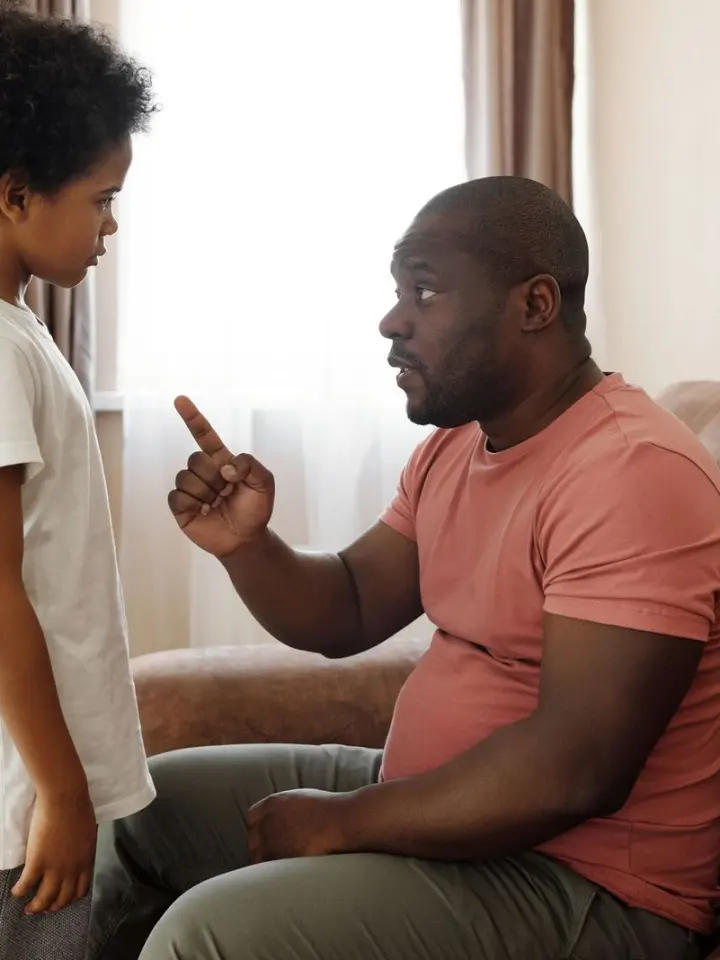
The first theme in the interviews was adultification. Some participants described becoming an emotional carer for a hurt parent, a role that sits uneasily with being a child.
The same theme included an early awareness of parental sexuality, which children are rarely ready to process. Neither point proves how often this happens, but both show how an affair can shift who looks after whom inside a household.
Trust and later romantic relationships
A 2009 study described in the City paper found that 70% of participants said their experience of parental infidelity lessened their ability to trust romantic partners. The paper links weak trust to difficulty accepting support and guidance from a partner.
Another study from 2019, also cited there, found that participants exposed to parental infidelity scored lower than those who were not on measures of fairness and loyalty. The authors read this as a sign that a parent’s affair can affect both relationships with family of origin and with romantic partners.
In the interviews, this showed up as a fear of abandonment and worry about relationship breakdown. Those are individual accounts, not a rule for every child.
Does a parent’s affair make adult children more likely to cheat?
The City paper notes that several studies found a positive correlation between parental infidelity and a person’s own infidelity or likelihood of it. A study reported by PsyPost in November 2025 looked at the same question with 280 participants aged 18 to 30, all unmarried, without children and in a relationship.
Its main findings, as of that PsyPost report:
- Participants who knew a parent had been unfaithful reported higher intentions to be unfaithful themselves.
- Fathers were named as the unfaithful parent more often than mothers.
- Attachment avoidance was linked to infidelity intentions, but attachment anxiety was not.
- A person’s own past cheating was the strongest predictor of future intentions.
Two cautions apply. The survey asked people to rate how likely they would be to cheat in hypothetical situations, which is not the same as what they do, and a link between two things does not show that one causes the other.
Divorce, the sleeper effect and the wider family
An excerpt from a book on infidelity, published by Kindred Media, argues that affairs and the divorces that often follow can pass from one generation to the next. It says that, in 2012, one quarter of adults under 45 in the U.S. were children of divorce. It is an author’s account rather than a peer-reviewed study, so treat its claims as one viewpoint.
The excerpt also describes a sleeper effect: the worst symptoms often appear when children leave home and try to form intimate relationships of their own. It says the same may apply to children of infidelity. To see how often affairs end marriages, read about infidelity and divorce rates.
Children are not the only relatives affected, and our page on infidelity and extended family covers grandparents, siblings of the couple and others who get pulled in.
What helps children heal
The sources agree that harm is real but not the end of the story. The Kindred excerpt says the dark side of family life is real, but so are the many paths to healing.
In the City interviews, the pathway to healing included three strands:
- Restoration through destruction, where a painful break led to rebuilding.
- Perspective, through intellectualization and understanding.
- Honesty and openness about what happened.
None of the sources offers a treatment plan. If a child or an adult is struggling after a parent’s affair, a licensed mental health professional is the right person to ask.
Frequently asked questions
At what age do children usually find out about a parent’s affair?
Show answer
In the study PsyPost reported in November 2025, participants typically discovered it during adolescence, around age 13. The researchers noted this is a stage when people begin forming their own ideas about romantic relationships.
Does a parent’s infidelity mean a child will cheat later?
Show answer
No. Studies report a positive link between the two, but a link is not a prediction for any one person. In the 2025-reported study, a person’s own past cheating was a stronger predictor than parental history.
Why does a parent’s affair affect trust?
Show answer
The City paper describes a parent’s affair as a breach of the safety and security children expected from role models. In a 2009 study it cites, 70% of participants said it lessened their ability to trust romantic partners.
How strong is this evidence?
Show answer
It is mixed. One qualitative study used six interviewees, one survey used 280 young adults and measured intentions rather than behaviour, and one source is a book excerpt. Together they show patterns worth knowing about, not firm odds.